Table of contents
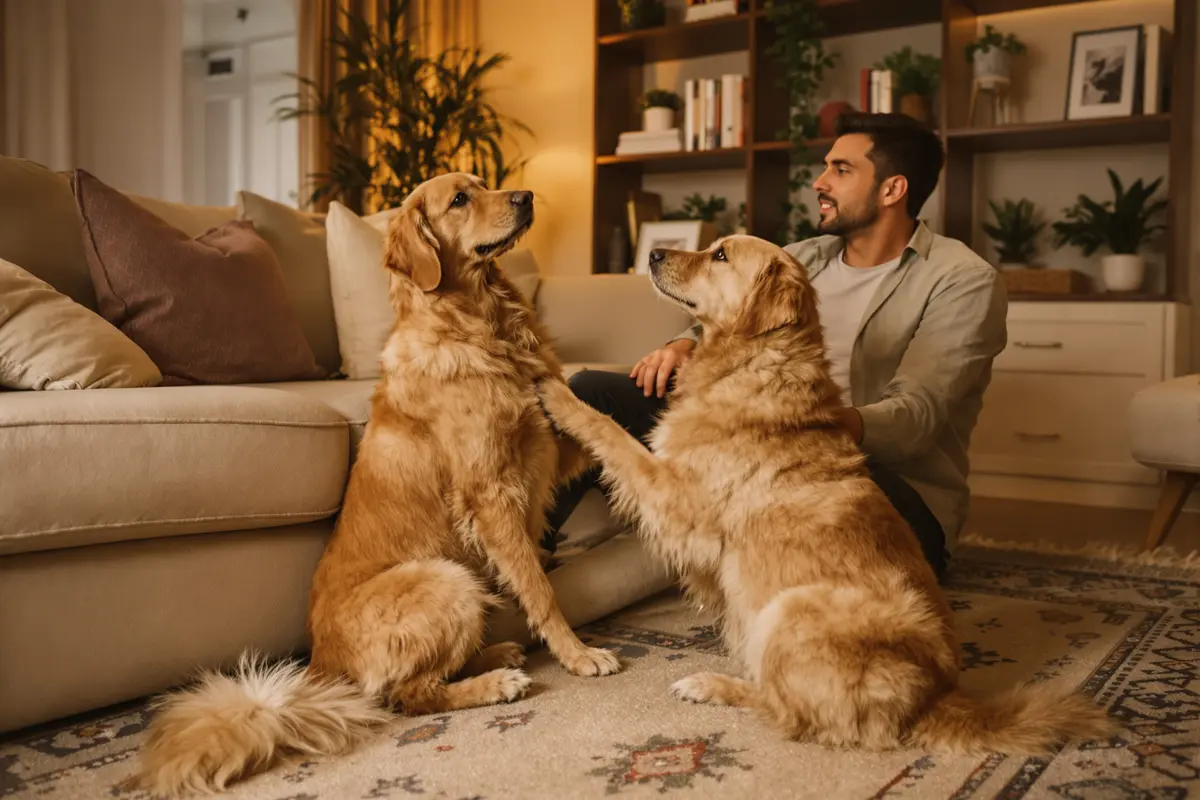
You’re sitting quietly, and suddenly your dog lifts a paw and presses it on your leg. Sweet, right? Maybe. But experts say there’s often more behind that simple gesture than just saying hello. In fact, your dog might be trying to tell you something important—and if you’re not paying attention, you could miss the message completely.
That paw isn’t random: it’s part of a bigger message
Dogs don’t “speak” with just one part of their body. When your dog offers you its paw, it’s using its entire body to send a message. Looking only at the paw misses the bigger picture.
Take a closer look. Are your dog’s ears back? Is the tail wagging low or tucked? Are the eyes tense or wide? Those signs all help you understand what the paw means. It could be a gentle bid for affection—or a signal that something’s not right.
Pawing can reveal stress, love, or confusion
Not all pawing is playful. In fact, some dogs use their paw when they’re feeling overwhelmed or uncomfortable. Animal behaviorists say it’s one part of what they call “calming signals” — small gestures dogs use to express uncertainty or defuse tension.
Imagine a young pup during a noisy evening at home. Loud TV, excited kids, and lots of movement. He keeps putting his paw on your arm or chest, maybe even your face. It might look like he’s begging to play, but his body says otherwise: yawning, lip licking, a low tail, and fast breathing. Those are signs of stress—not boredom.
That paw can mean: “This is too much for me.”
Misreading the paw can confuse your dog
Dogs quickly learn which behaviors get your attention. If you stroke your dog after it paws you during a stressful moment, it might learn that stress gets rewarded with petting. Not helpful for either of you.
Equally, if your dog reaches for you when scared—say, during a vet visit—and you pull away, you teach them that their plea for comfort goes unanswered. Over time, this can break trust and make your dog feel more alone during tricky situations.
How to read the signal behind the paw
Experts recommend a quick checklist when your dog paws at you:
- Eyes: Are they soft and blinking, or round and fixed?
- Mouth: Relaxed or tight? Is your dog panting fast?
- Tail: Wagging gently, stiff, or tucked under?
- Tension: Are their muscles soft or stiff? Are they leaning in or scratching hard?
- Context: What just happened—was it loud, stressful, calm, or playful?
If your dog seems relaxed, that paw is likely saying: “More attention, please.” You can respond by petting gently or calmly playing.
If your pup looks tense or wide-eyed, the paw might be saying: “I need help.” A gentle response—quiet words, slow movements, or even just sitting close—can go a long way.
Understanding this can change your daily bond
For many owners, noticing this pattern shifts how they interact with their dog. What once looked like quirky behavior becomes real communication.
Maybe you’ll notice your dog paws you during loud family arguments or when the vacuum cleaner comes out. Maybe the paw only arrives on quiet evenings, signaling something much softer: “Stay with me like this.”
The right responses build trust
If you start responding to the paw with care and awareness, here’s what happens:
- Pet your dog when it’s calm, and you reinforce peaceful behavior.
- Step back gently when your dog seems overwhelmed, and you show respect for its space.
- Speak softly when they look unsure, and you become their guide through tough moments.
Frequently asked questions
Why does my dog only give its paw when I stop petting?
Your dog might have learned that the paw works like a “keep going” button. You stop petting, it paws, and you start again. If everything else looks relaxed, it’s probably just looking for more love.
My dog paws and then whines. Is that just seeking attention?
It could be—but attention doesn’t always mean fun. Whining plus pawing might signal frustration, fear, or even confusion. Look at what’s happening around your dog. Is there a strange sound or a blocked door?
Is pawing a sign of dominance?
No. That idea’s outdated. Today’s experts agree: a paw isn’t about control. It’s about emotion—connection, anxiety, excitement, or discomfort.
Should I ignore it when my dog paws at me?
Not always. If it happens during pushy or hyped-up energy, calmly ignore it. But in moments of fear or confusion, your dog needs comfort. Don’t ignore those silent cries.
What about teaching the “shake paw” trick?
Absolutely! Just use clear signals and short training sessions. That way, your dog knows when it’s a trick and when it’s real communication. One doesn’t cancel out the other.
Final thought: don’t shrug off the paw
That sudden tap on your sleeve? It’s more than cute. It might be your dog’s way of asking a question or reaching for calm. Once you learn to “read the paw,” it’s like opening a new window into your dog’s world. And once you see that, it’s pretty hard to go back.