Table of contents
At the bottom of the ocean, something truly ancient has resurfaced—and it’s shaking the world of science. When a group of French divers descended deep into the waters off Indonesia, they didn’t just capture a rare sight. They may have just rewritten parts of the story we thought we knew about life on Earth.
A ghost from the deep: coelacanth caught on camera
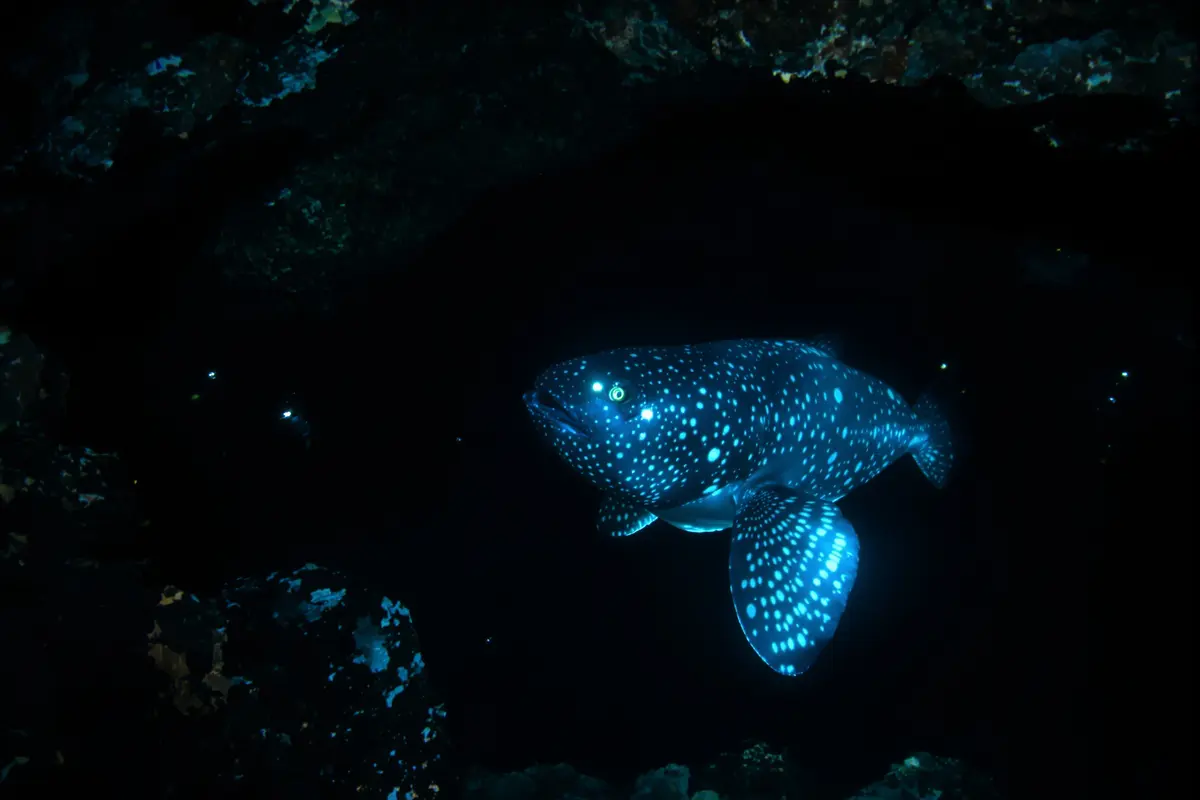
120 meters below the surface, where sunlight barely exists, the divers’ headlights met two pale eyes peering from the shadows. As their lights adjusted, the creature’s thick, lobe-like fins moved with slow, almost humanlike motions.
What they had found was a living coelacanth. This prehistoric fish was thought to have gone extinct some 66 million years ago—until one was discovered alive in 1938 off South Africa. Since then, only a few sightings have ever been recorded in the wild.
This latest footage, captured in Indonesian waters, is one of the clearest, most detailed looks scientists have had of this elusive animal in its natural habitat. With bluish scales and fins that appear more like legs than flippers, it looks like it swam out of history itself.
Diving to the edge of possibility
This wasn’t an ordinary dive. Reaching depths over 100 meters required the team to use advanced mixed-gas rebreathers, multiple computers, and strict safety protocols. Every minute spent at the bottom meant dozens more returning to the surface slowly, step by step, to avoid life-threatening decompression sickness.
The plan was precise: descend before dawn, stay quiet, and keep lights low. Coelacanths prefer to rest in caves during daylight hours, moving very little—like statues of stone. Sudden movement or bright lights could make them bolt—or worse, cause severe stress.
The French team followed a strict ethical approach to avoid harming the fish. Their self-imposed rules included:
- Never block the fish’s path
- Use the lowest light intensity possible
- Keep the encounter short—just a few minutes
- Avoid sudden movements at all costs
- Stick to the dive plan, even if the fish disappears into deeper water
They knew their job wasn’t just about getting the shot—it was about protecting a fragile piece of our ancient past.
Why this ancient fish matters
Calling the coelacanth a “living fossil” might sound dramatic, but it’s not far off. Its body design has changed incredibly little over millions of years. Scientists are fascinated by its jointed fins, which resemble the earliest stages of limbs—offering clues about how life might have made the leap from sea to land.
Frame by frame, the French team’s footage lets researchers explore details they could only guess at before: the swimming style, the way the gills move, even the exact placement of those mysterious white spots that dot its body like stars.
This is more than just a one-off discovery. It helps scientists understand how ancient species survive in a modern world where oceans are under daily threat—from overfishing to plastic pollution to climate change.
Local legends and silent guardians
The story of how the divers found the coelacanth begins not with high-tech gear, but with old fisherman tales. Locals had quietly passed down stories about a strange, heavy fish caught by deep-sea nets—too weird to sell, too rare to explain. Some called it blessed. Others, cursed.
This quiet acceptance may have inadvertently helped the coelacanth survive. In a world that usually exploits anything rare, this forgotten fish was left alone—neither hunted nor celebrated. That might be its biggest lucky break.
A wake-up call for modern science
These stunning new images are now making their way through the scientific community. And they raise a question that hits hard: if a creature this ancient, this unknown, can still exist today—what else are we about to lose before we even notice it?
For everyday people, the message is clear. You don’t need to dive 120 meters to make a difference. Here’s how you can help protect rare species like the coelacanth:
- Support marine protected areas and conservation programs
- Choose seafood from sustainable sources
- Reduce your use of single-use plastics
- Fund and follow serious ocean science efforts
What the coelacanth still teaches us
Watching this slow-moving, heavy-bodied fish drift through deep water feels like watching history come alive. Its quiet existence reminds us how little we really know about the oceans—and how much we take for granted.
This discovery doesn’t just challenge old theories. It inspires new ones. And it invites all of us—you included—to stay curious, stay alert, and stay respectful toward nature’s incredible, invisible wonders.