Table of contents
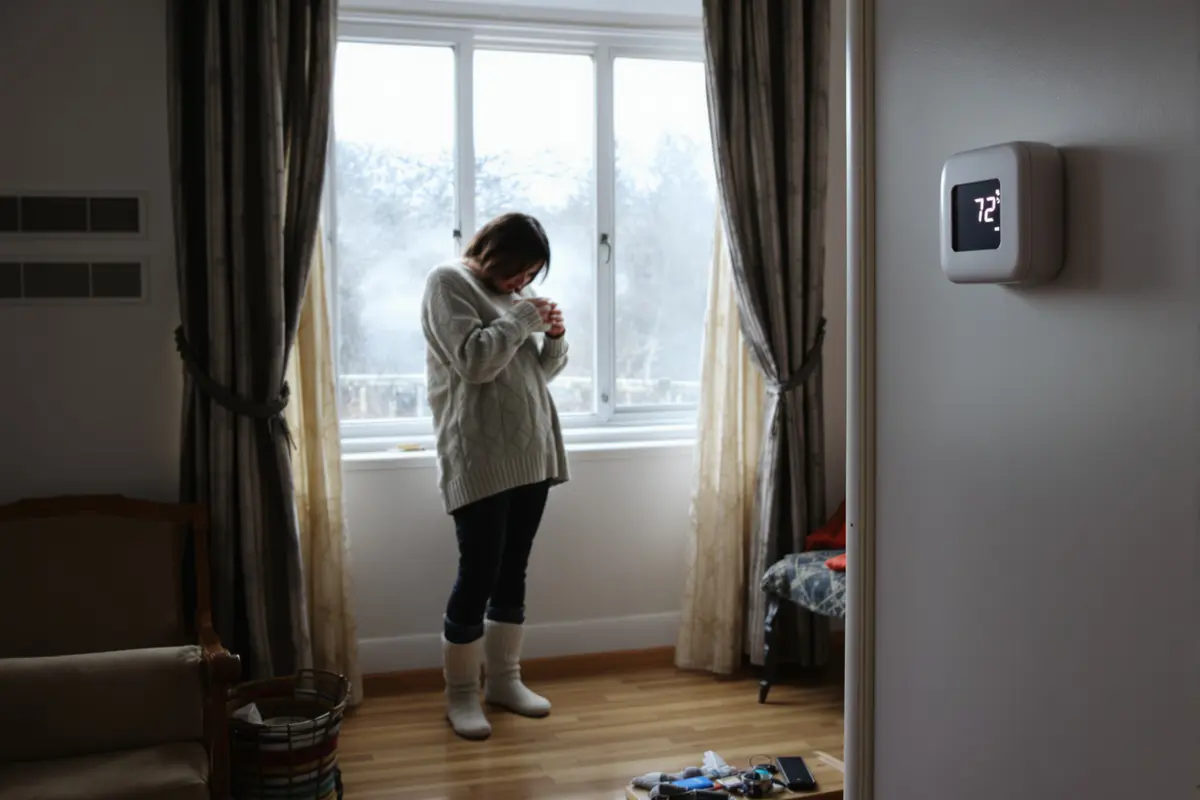
It’s the middle of January. Your thermostat says 72°F, but you’re still reaching for a sweater. You check the vents—warm air’s coming out. So why does your home still feel cold?
You’re not alone. Many people experience this chilling mystery every winter. The good news? There are clear reasons behind it—and most of them can be fixed.
1. Your house is leaking heat
Warm air might be slipping right out of your home. Heat loves to escape through tiny cracks and poorly sealed spaces. And when it does, cold air rushes in to take its place.
Some of the most common leak points include:
- Old windows and frames that aren’t insulated
- Drafty doors with gaps at the bottom or around the edges
- Attics and basements with poor insulation
- Electrical outlets on exterior walls
Even if you’re pumping in heat, your home is fighting back if it’s not sealed tight. Try using weather stripping, caulking, or door sweeps. Or call a professional to check for major problem areas.
2. Your insulation might be failing
Insulation acts like a blanket for your house. If it’s thin, old, or improperly installed, the warmth disappears fast.
Think of your attic and walls as the front line in a battle against freezing temperatures. If they’re not protected, your heat escapes upward and outward within minutes.
Consider adding or upgrading insulation in:
- Attics (Recommended R-value: R-38 to R-60, depending on climate)
- Basement ceilings or walls
- Exterior walls, especially in older homes
Want to check without ripping out drywall? An infrared camera inspection shows cold spots and insulation gaps with zero damage.
3. Air circulation may be uneven
Sometimes, the heat’s not the problem—it’s where the heat goes. Uneven airflow can make one room cozy and the next one an icebox.
Look out for these signs:
- Cold spots in bedrooms or hallways
- Heat collecting mainly near the vents
- Weak air pressure in certain rooms
To fix this, start simple: open all air registers and make sure furniture isn’t blocking vents. You can also run your ceiling fans clockwise in the winter. This pushes rising hot air back down where you can feel it.
If it still feels off, your ductwork may be leaky or designed poorly. In that case, a heating contractor can rebalance the system for better airflow.
4. Your thermostat might be lying
This one surprises people—a lot. Your thermostat tells your HVAC when to run, but it doesn’t always speak the truth.
If your thermostat is:
- Near a sunlit window, it may think the house is warmer than it is
- Placed too close to a heat vent, it may shut off too soon
- Out of calibration (even by 2–3°F), it can throw everything off
Try relocating the thermostat—or upgrade to a smart version that can even out temperatures across zones or by room.
5. Humidity plays a sneaky role
Dry winter air feels cold—even if the temperature is normal. That’s because low humidity dries out your skin and nasal passages. It also makes your body cool down faster through evaporation.
Keeping indoor humidity around 30–40% can make it feel much warmer and more comfortable.
You can add moisture using:
- A whole-home humidifier if your HVAC supports it
- A portable humidifier for bedrooms and living areas
- Simple tricks like leaving the bathroom door open after a hot shower
6. Your heating system might be undersized
Sometimes, it’s not about leaks, airflow, or humidity. The heat source might just be too small for your space.
This is common in older homes that were remodeled or expanded without upgrading the HVAC. Or maybe the furnace is just aging and losing power.
Signs include:
- Long runtime with little increase in comfort
- Struggles to keep steady temperatures during extreme cold
- Heat loss after shutdown within minutes
The fix might be to upgrade to a more powerful furnace or supplement with space heaters, electric baseboard heaters, or ductless mini-splits in hard-to-heat zones.
Keep warmth from slipping away
If your home still feels cold in January—even with the heat running—don’t ignore it. There’s usually a clear reason. And most solutions are more affordable than cranking the thermostat.
Start by checking for drafts, improving insulation, and examining your airflow. With a few smart changes, you can turn that chilly house into a cozy haven before winter ends.