Table of contents
That gorgeous vine climbing your fence might be hiding more than just old petals and leaves. If you’ve planted jasmine in your garden, especially in a warm climate, you might have unknowingly rolled out the welcome mat for unexpected guests—snakes.
The Plant Often Blamed for Snake Sightings
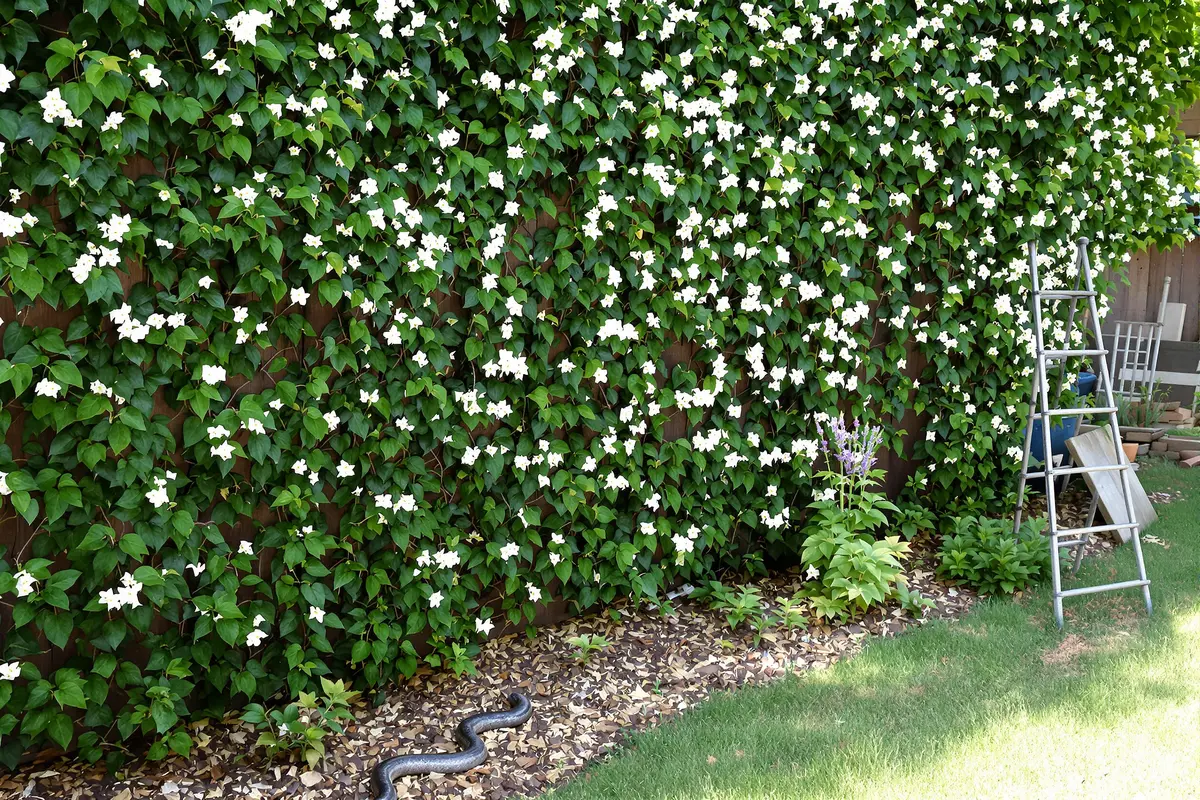
Jasmine, especially dense varieties like Confederate jasmine and star jasmine, is praised for its fragrant flowers and lush, evergreen beauty. But those very features that make it so appealing also make it a top pick for snakes looking for shelter.
What makes jasmine so snake-friendly? It’s not magic—it’s structure. Jasmine’s dense vines and thick foliage provide perfect cover. When planted along fences or walls, it creates a shaded, cool corridor. That’s a dream space for reptiles, especially in warm areas.
Why Snakes See Jasmine as Perfect Cover
Snakes don’t care about flowers or landscaping styles. What they look for is shade, cover, and food. Jasmine offers all three:
- Shade and cool temperatures under evergreen leaves
- Small animals like lizards, frogs, and rodents attracted to the area
- Safe paths where they can move unnoticed
Your garden might seem peaceful, but if you’ve got a birdbath, some leaky hose spots, or dropped seeds from a feeder, you’re already welcoming prey animals. Snakes naturally follow them, and when jasmine offers a tunnel to hunt in, they follow the path.
Common Snake-Friendly Areas in Gardens
Experts don’t just blame jasmine. They look at the bigger picture—how some spaces unintentionally turn into cozy reptile resorts. Here are a few high-risk layouts:
- Narrow side yards with fences and climbing vines
- Jasmine planted right by steps, railings or fences
- Mulch, fallen leaves, and bark collecting at the base
- Wood or rock piles tucked against dense plants
Each item on its own may seem harmless, but combined, they create the perfect habitat for snakes during hot summer months.
How to Enjoy Jasmine Without Inviting Trouble
You don’t have to tear out every vine or avoid your favorite plants completely. Instead, you can make small landscaping changes that discourage snakes while keeping your garden beautiful.
Smart landscaping tips:
- Raise jasmine onto trellises and leave the bottom 12–16 inches open for air and light
- Keep shrub bases clean: rake out dead leaves and trim away decaying stems
- Avoid placing jasmine directly next to doorways, steps, or play zones
- Move clutter like wood, bricks, and construction materials away from plant bases
Better Plant Alternatives for High-Traffic Spots
If you want greenery near your porches, patios or walkways, these fragrant and beautiful plants are less likely to attract snakes:
- Lavender
- Salvia
- Echinacea (coneflowers)
- Ornamental grasses with upright growth that allow visibility underneath
The Mistakes That Invite Snakes Without You Realizing
Even the most careful gardener can overlook how quickly a cozy corner becomes a hiding spot.
A few common missteps include:
- Heavily watering the base of shrubs during heat waves—this attracts frogs and insects
- Letting mulch bags or pallets sit too long behind vines
- Stacking garden clutter too close to dense vegetation
- Planting thick, low shrubs right below windows and outdoor seating
These choices create a welcoming maze of cool, safe spots—just what a snake is looking for on a hot day.
What Experts Really Say About “Snake Plants”
Snake control professionals and biologists agree: it’s not jasmine itself, but the cover and prey it supports. If it creates a shaded tunnel near a wall—or worse, right where people play or walk—it becomes part of a stealthy route for reptiles.
Snakes hate being exposed. So if your yard offers shelter at every step, they’re not just visiting—they’re moving in.
Reclaim Your Garden With Small, Smart Tweaks
Don’t panic. A snake-friendly plant doesn’t mean you have to redesign your whole garden. But it does mean thinking like a snake for a minute or two. Ask yourself: Where would I hide? Where would I hunt? Where would I slither in shade?
Once you start seeing jasmine the way reptiles see it, you’ll notice potential entryways and hiding spots. That’s the first step to making them less inviting.
Simple steps = safer yard:
- Lift vines off the ground
- Keep shrubs trimmed and clean at the base
- Choose open, airy plants where kids and pets play
- Relocate stacked debris and building material
Final Thought: Beauty and Safety Can Coexist
It’s possible to have a lush, sweet-smelling garden without welcoming snakes too close to your home. With just a little more awareness about plant structure and layout, you can enjoy jasmine and its dreamy scent—without creating a reptile rest stop.
Because in the end, it’s not about the plant. It’s about what the plant creates.