Table of contents
Think broccoli, cauliflower, and cabbage are strangers with nothing in common? Think again. These three vegetables, despite their wildly different looks and textures, are actually the same species. That’s right—underneath all that leafy flair and fractal beauty lies one humble ancestor. Ready to see your grocery list in a whole new light?
One plant, many disguises: meet Brassica oleracea
It may sound like a scientific tongue-twister, but Brassica oleracea is the plant behind a whole family of vegetables. Broccoli, cauliflower, and cabbage are just a few of the forms it takes. They all descend from a wild version that grew along Europe’s rocky coastlines—tough, salty, and scrappy enough to survive when other crops couldn’t.
Over time, farmers noticed something magical: this wild plant could change. Some grew fuller leaves, others had tighter flower buds, and some showed off thicker stems. By saving seeds from the plants they liked best, generation after generation, people naturally sculpted new vegetables—all without labs or science degrees.
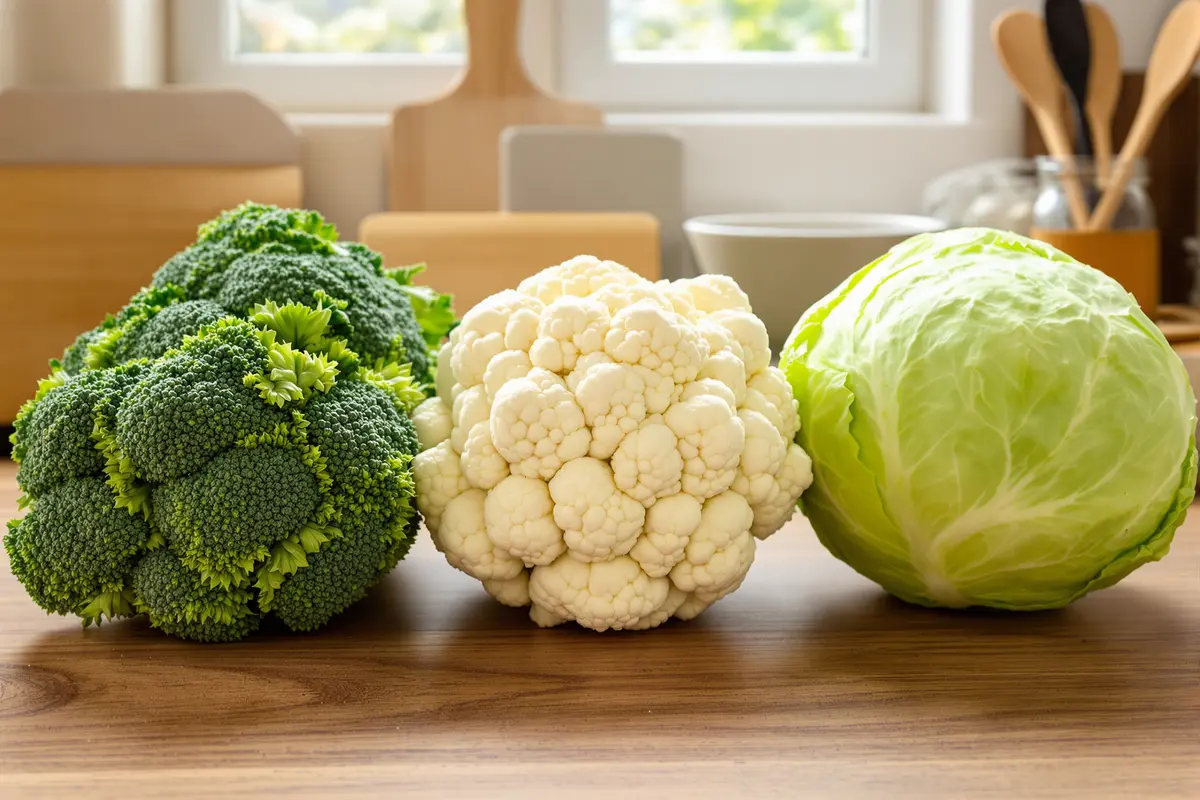
The result? Three vegetables born from the same source:
- Cabbage: selected for its thick, tightly packed leaves
- Broccoli: chosen for its green immature flower buds
- Cauliflower: developed for its pale, dense flower head
Think of them like dog breeds—different looks, same species.
Why do they look and taste so different, then?
It all comes down to selective breeding. Just like picking the fluffiest dog pup or the fastest horse colt, farmers favored specific traits. Over centuries, those traits became so strong, the vegetables seemed completely unrelated.
But DNA tells the truth. Scientists confirm that broccoli, cauliflower, and cabbage have so much in common, they can even cross-pollinate. That’s how hybrids like Romanesco and broccoflower came to be—wildly different appearances, but biologically one and the same.
Same plant, same kitchen rules
Here comes the game changer: if they’re the same species, why not cook them the same way?
Try this easy test. Chop broccoli, cabbage, and cauliflower into bite-sized chunks. Toss them on one tray with olive oil, salt, and garlic. Roast at high heat until golden and crispy on the edges.
Smell that nutty aroma? See how they all brown the same way? That’s the hidden family resemblance coming out. Under heat and spice, their differences fade—and their shared roots shine.
Swap them freely: your meals just got easier
Knowing they’re relatives simplifies your meal planning. Don’t let missing ingredients ruin dinner. Use them interchangeably where it makes sense:
- Shred cabbage into a broccoli stir-fry
- Roast broccoli like cauliflower for a crispy side
- Add chopped cauliflower into a cabbage slaw
Their structure and cooking times are similar, so go ahead and substitute. The nutrients are nearly identical, too—rich in fiber, loaded with vitamin C, and packed with sulfur compounds known for their health benefits (and funky smells!).
Peek inside the brassica family tree
The story doesn’t end with just three veggies. Brassica oleracea has more siblings:
- Kale: leafy and bold
- Brussels sprouts: mini cabbages with attitude
- Kohlrabi: stem turned bulb
It’s one species expressed in many ways, shaped by ancient hands and modern kitchens.
Let your eyes—and your recipes—see the truth
We’ve been tricked by habit. Recipes, grocery aisles, even food blogs push the idea that each vegetable has a set role. Cabbage is for slaws. Broccoli is for diets. Cauliflower is for cheese-tricks. But all that changes once you know they’re the same plant.
Here’s a quick cheat sheet to stick on your fridge:
| Vegetable | Definition |
|---|---|
| Broccoli | Immature flower buds |
| Cauliflower | Compact, pale flower head |
| Cabbage | Tightly packed leafy ball |
Use the same roasting, sautéing, or seasoning tricks on all three. Let your cooking imagination stretch across that shared DNA.
Your plate, your power
Once you see these vegetables for what they really are, you stop asking, “What do I do with this boring cabbage?” and start asking, “What can this plant become today?” That mental shift makes shopping smarter and cooking more creative. And surprisingly, it might just make your meals more exciting with a lot less effort.
So next time you’re staring at the veggie shelf, remember: those aren’t three strangers. They’re siblings. And they’re all ready to play different roles in your next meal.