Table of contents
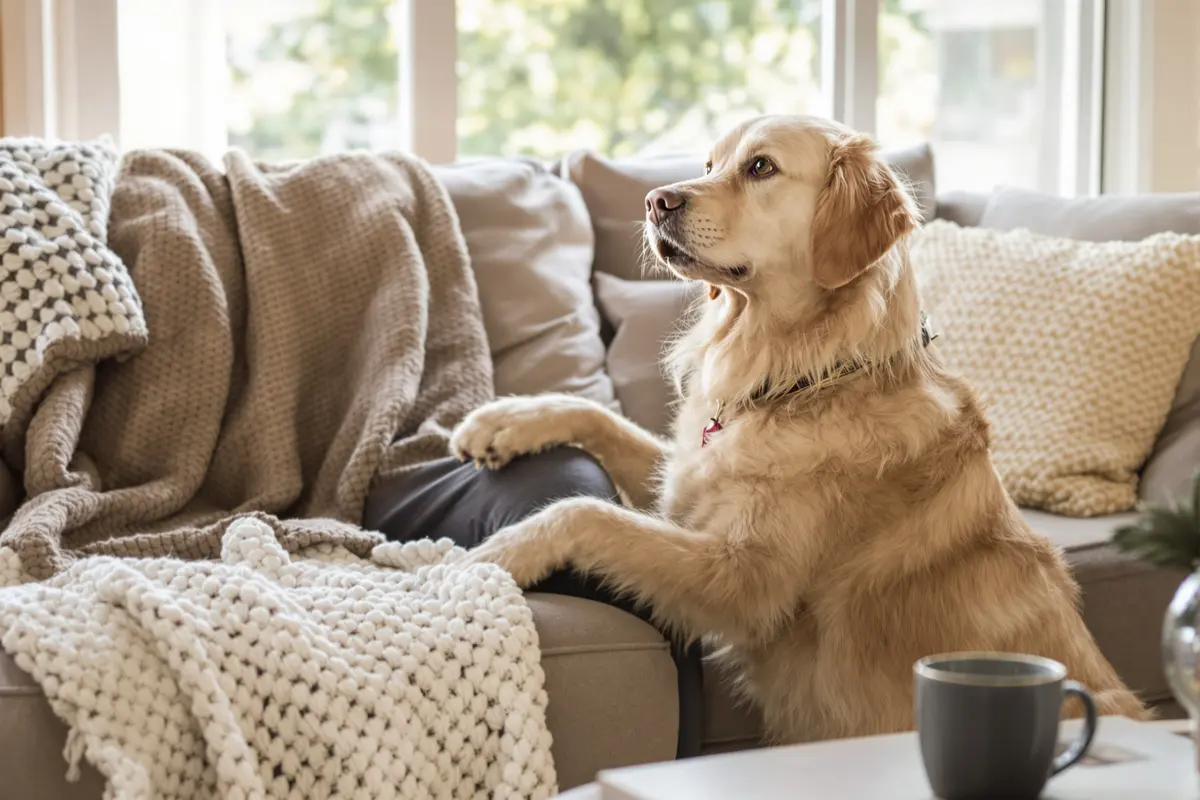
You’re relaxing on the couch when you feel it: a warm paw resting gently on your leg. Your dog’s eyes are soft, almost questioning. You smile, give a quick scratch behind the ears, and move on. But hold on — that moment might mean more than you think.
That paw? It’s a message, not just a gesture
Dogs don’t speak our language, but they definitely know how to send signals. When your dog puts a paw on you, it’s not just asking for a treat or trying out a trick. Experts say it could be asking a question, showing affection, or even reaching out in distress.
The key? Don’t focus on the paw alone. Look at the rest of the body. Is the tail wagging loosely? Are the eyes calm? Or is your dog panting fast with ears back and body tense?
Why dogs place their paw on you without being asked
There’s no one-size-fits-all answer. The same paw tap can mean different things in different situations.
- Seeking affection: A relaxed pup may use their paw to simply say, “Spend time with me.”
- Feeling overwhelmed: Stress, loud environments, or emotional tension can trigger pawing as a way to cope or reach out.
- Trying to communicate: Dogs might use their paw as part of a series of calming signals — like lip licking or turning their head — to say, “I’m not okay.”
The power of body language
Animal behaviorists say that dogs speak with their entire body, not just their paws. When your dog reaches out, check these key parts for clues:
- Eyes: Are they soft and blinking, or wide and fixed?
- Mouth: Slightly open and relaxed, or tightly closed and panting hard?
- Tail: Wagging gently, standing stiff like a flag, or tucked low?
- Body weight: A soft touch, or strong pressure with nails pressing in?
- Context: Is it peaceful time at home, or just after something stressful like the vacuum or loud voices?
All of these together paint the real picture. That paw might be more like a full sentence than a simple greeting.
What to do when your dog paws at you
So what’s the best response? Try this simple trick from trainers: pause for three seconds. Don’t react. Just observe.
If your dog looks relaxed and the moment is calm, go ahead and offer gentle affection. Rub their chest or shoulders. Speak softly. Maybe invite them to play calmly if that fits.
But if your dog seems tense — maybe wide eyes, tight muscles, fast breathing — it’s a sign they might feel unsure or overstimulated. In that case, avoid loud praise or sudden touch. Offer calm support instead, like moving away from the stressor or guiding your dog to a quieter spot.
Common mistakes people make
Many owners accidentally reward pawing at the wrong times. If your dog barks wildly at the window, then jumps up and paws you, and you pet them right after — it teaches them that chaos brings attention.
Another tricky moment? The vet’s office. If your anxious dog puts a paw on you while you’re busy discussing test results, and you miss it, they might feel ignored just when they need reassurance most.
Should you ignore it completely? Not always
Ignoring the paw isn’t always right. Sure, if it’s connected to pushy or overexcited behavior, it’s okay to stay still and wait for calm. But when the paw shows up during a time of fear or stress, it’s your dog’s way of saying, “I need help here.” Respect that message.
The hidden patterns behind the paw
Once you start paying attention, you might notice surprising patterns. Some dogs only paw when noise levels rise, children start yelling, or someone storms out of the room. Others wait for peaceful moments to reach for you — a quiet way of saying, “Let’s stay like this.”
This tiny gesture becomes a quiet voice, one that’s easy to miss but deeply meaningful once you hear it.
Quick tips: how to tell what your dog’s paw means
- If your dog gives a paw when you stop petting: It’s usually a polite way of saying “please continue.” And yes, it works—because you often do!
- If there’s whining with the paw: Don’t just assume it’s attention-seeking. Check the whole scene. Is the environment stressful, noisy, or confusing for your dog?
- Is it a sign of dominance? Experts say no. Dogs use their paw to communicate emotion, not control you.
- Should you ignore it? Only if it comes in chaotic moments you don’t want to reinforce. Calm signals should be met gently.
And yes, you can still teach the “shake” trick
Teaching your dog to “shake” is great — just remember to separate training from emotional moments. A dog offered a paw on cue is not the same as one reaching out on their own. Keep both clear, and both stay meaningful.
Next time you feel that familiar touch, slow down and look closely. Your dog might not be performing a trick. It could be asking something deeper: “Are you listening?”